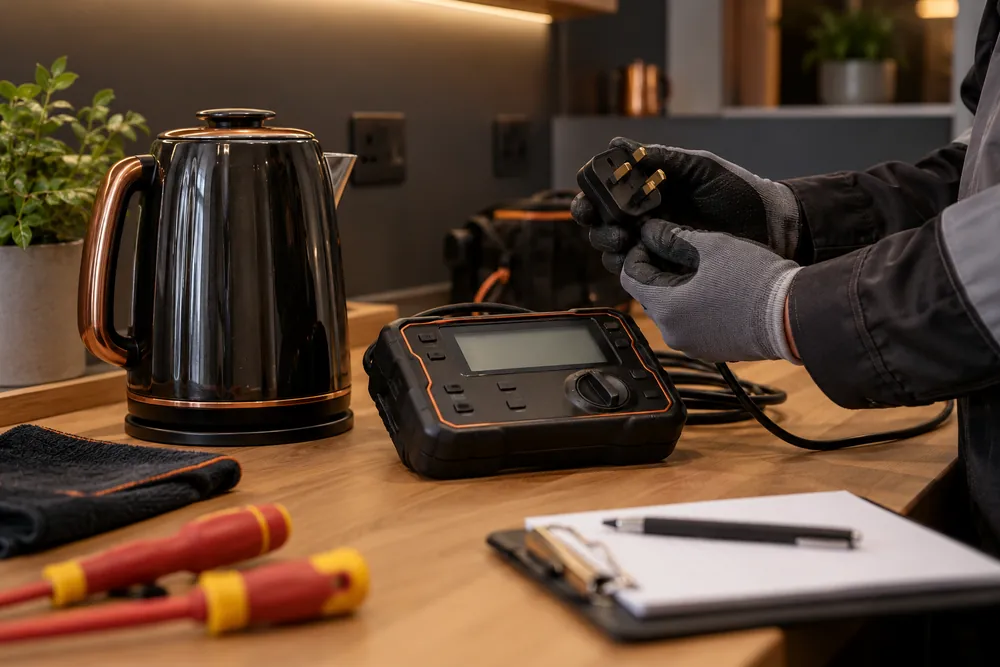
What PAT Testing Involves
Portable appliance testing is the familiar name for inspecting and, where appropriate, testing electrical equipment used at work. It can help identify damaged plugs, flexible cables, enclosures and electrical faults that are not obvious in normal use. A useful service considers the equipment and its environment rather than treating a sticker as the objective.
For an office, the inventory might include cleaning equipment, kettles, extension leads and desk equipment. A workshop may have portable tools exposed to more demanding conditions. Some items need visual checks, some need instrument tests and others require a different specialist approach because of their construction or use.
Our first step is to establish what equipment you have, where it is located and how it is used. We can then define a practical inspection scope. Do not include fixed wiring, emergency lighting or specialist machinery in a PAT quotation without checking whether the proposed service actually covers them.
When Workplace Equipment Needs Attention
Look at how often equipment is moved, who uses it and whether cables can be trapped or damaged. A floor cleaner handled daily faces different risks from equipment left undisturbed in a dry office. Previous faults and repairs also matter when choosing an inspection approach.
Visible damage, overheating, loose parts or an unreliable plug need action when discovered. Remove suspect equipment from use and arrange competent assessment. Waiting for the next planned PAT visit is not a safe response to an item that may already present a danger.
What The Law Actually Requires
The Electricity at Work Regulations 1989 require electrical equipment that could cause injury to be maintained in a safe condition. They do not impose annual PAT testing on every workplace appliance. HSE recommends an approach based on the equipment, its use and the working environment.
New equipment does not normally need a formal PAT test before first use, although a visual check for damage is sensible. Competence matters when tests are needed because readings must be interpreted correctly. See the HSE portable appliance testing guidance for these distinctions.
How A Visit Is Organised
First, identify the work areas and give a realistic estimate of equipment quantities. Include cupboards, meeting rooms, staff kitchens and remote stores where relevant. Agree whether staff-owned equipment is within the scope and who can authorise access to it.
Next, we plan access and disconnection with your site contact. Equipment must be made available, and some items will be unavailable while checks take place. Servers, specialist electronics and business-critical devices need a suitable method agreed in advance rather than indiscriminate disconnection.
During the visit, items are identified, visually inspected and tested where appropriate to the agreed approach. Results and defects should be recorded in a usable format. The handover should distinguish items inspected, items tested, failures and anything unavailable, so missing equipment is not mistaken for a pass.
What Affects A PAT Testing Quote
Item quantities influence cost, but an accurate quotation also needs the equipment types and locations. Widely dispersed equipment takes longer to find and access than prepared items in one room. Restricted hours, induction requirements and the need for escorting can also affect the visit.
Ask whether the quotation includes an asset list, results and clear identification of failed items. Confirm how extra items and inaccessible equipment will be handled. We do not publish a blanket per-item price because the actual service and access arrangements should be understood first.
Using The Results In A Maintenance Plan
Use the equipment record to plan follow-up work, remove failed items and review recurring damage. A pass records the outcome of checks at that time, not a guarantee that an appliance cannot later become unsafe. Staff should continue reporting damaged cables, plugs and unusual behaviour between visits.
Your maintenance approach should be reviewed when equipment use, location or conditions change. Keep appliance records distinct from your commercial EICR, which deals with the fixed installation. If you are unsure which service is needed, describe the equipment and problem through our contact form.
PAT Testing FAQs
Is Annual PAT Testing A Legal Requirement?
Annual PAT testing is not a universal legal requirement for workplace appliances. The duty is to maintain equipment safely, with the approach based on risk. Equipment type, use, environment and previous findings should guide the plan, rather than applying the same testing interval to every item in every workplace.
What Happens To An Appliance That Fails?
An appliance that fails inspection or testing should be clearly identified and removed from use until an appropriate repair or replacement is arranged. The equipment record should explain the defect. Confirm who on site can take control of failed items so they do not accidentally return to service after the visit.